


Slowly reading Greek literature, tragedies, and mythology as a long, lived thing by staying inside the events until they start giving me meaning.
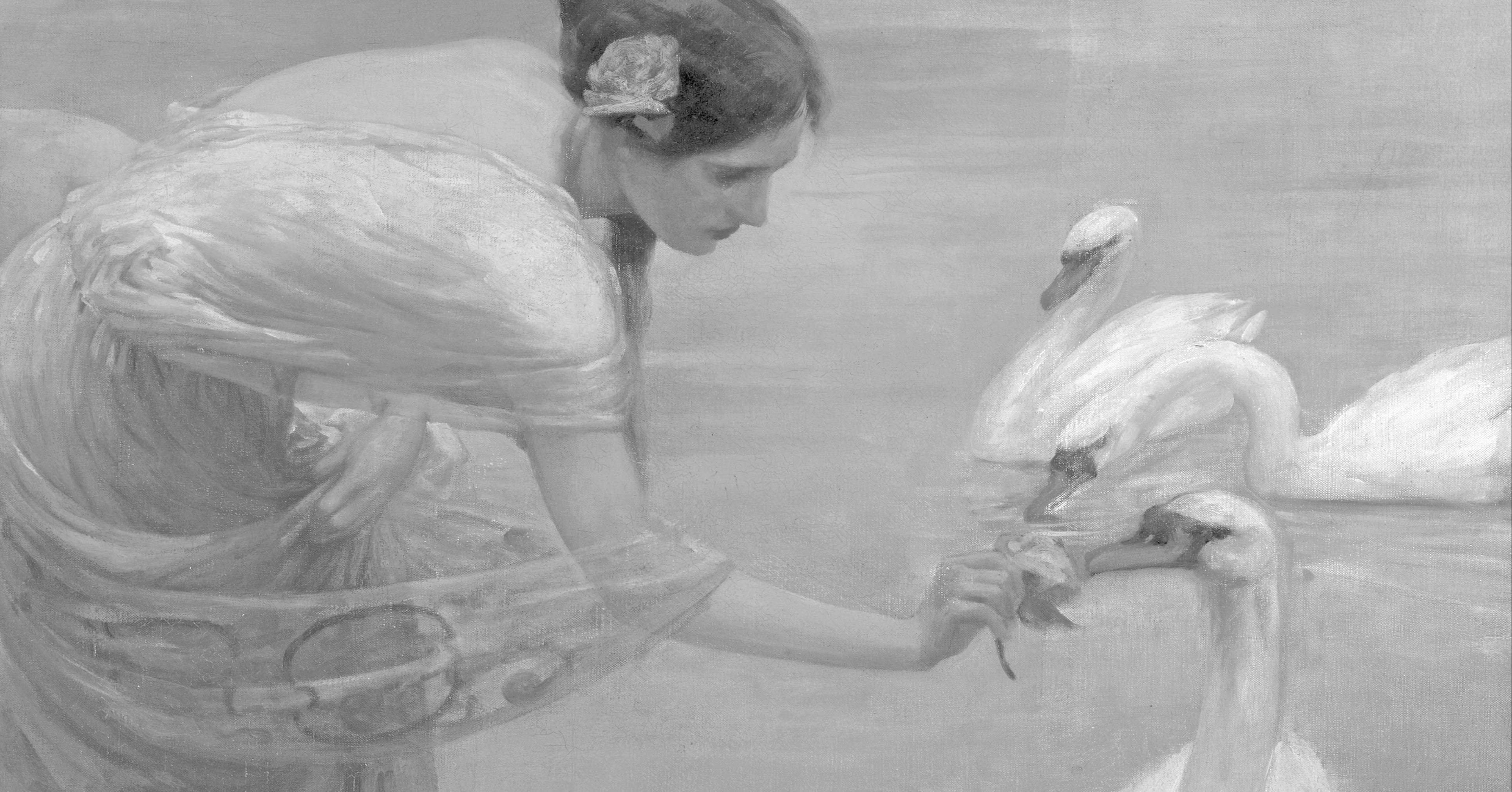
I am not sure where else to begin except with Aphrodite. I have been reading the Homeric Hymn to her, and something about the way desire gets talked about there has made me want to write about it.
In many cultures and myths, desire is never treated as a private affair, but was always given a name, a goddess, a history, a genealogy, a war, and a set of consequences, and more importantly, placed her among the powers that contain the order of the world.
When I can say no one can escape her, it is because the goddess moves among the gods and mortals as swiftly as entering a bedroom or a battlefield, a forest or a city, perhaps drifts in the air or washes off in the sea. Every living creature in the world answers to her, be it birds or beasts; even the gods and goddesses are wooed by her charms. Then how small are mortals, and how influenced are we by Aphrodite?
What instantly grabbed my attention was the voice of the hymn itself, how perfectly it assumes the reality of the gods and the seriousness in their powers. Aphrodite’s appearance felt as a presence that alters the shape of things, and to feel that desire itself is being described as a force that possesses, something that is irresistible.
I had a feeling that desire in the hymn is elevated because it is unavoidable. Without it, nothing would begin, no lineage would continue, no world would reproduce itself. Aphrodite is that force that compels beings out of isolation and bonds them into relation, which gives the world a movement, to move forward.
I also used to think of desire as something interior and expressive, something that belongs to me, that reveals who I am. But the hymn made me think of a different idea: desire does not originate inside us, but it comes to us, and at the end, makes use of us.
In the hymn, yet again Zeus intervenes and causes Aphrodite herself to desire a mortal man. I think this is central to the Greek moral imagination, that what you have authority over is never absolute and to rule a certain domain is to be bound by it too, and that gods themselves are not exempt from the structures they uphold or govern.
So Aphrodite’s desire takes her to Anchises; she disguises herself, appearing as a mortal woman of extraordinary beauty. This encounter unfolds slowly, and suddenly the seduction turns into fear. Anchises is not confident and I think he senses that such beauty always carries danger. In a few moments he worries that this woman might be divine, that intimacy with her might destroy him. I am going to settle for an intuition that attraction arrives alongside that something irreversible is about to occur.
After they sleep together, Aphrodite reveals herself and that is when the revelation is devastating because Anchises is expecting death. In Greek myth, mortals who cross divine boundaries rarely escape unpunished. That is when Aphrodite starts to speak and I cannot miss how she speaks of humiliation. Of the indignity of having loved a mortal, of having been drawn into the finite world that she usually only visits, of bearing a child who must grow old and die. She will bear a child. Aeneas will be strong, noble, protected, but he will age, hence he will suffer and he will die. However much she would want to intervene, delay this, or shield her child, in the end she cannot undo this basic structure of human life.
What makes me relate this feeling to desire deeply is to sense the fear of loss, becoming vulnerable and exposed. When we love someone, we start to sprout a new fear inside us, for them. Perhaps, that is the burden of love.
We often speak of following our desires (follow your heart, follow your desire…) as though they were guides to our authentic true selves. But the hymn made me question this too: once desire has entered our life, in any form, what will it demand of us and how does it change, and do we submit to this change willingly or unknowingly?
Desire once entered becomes an event that alters the conditions of a life, to feel compelled, and we mistake it for just a mood. To desire is us giving approval for inviting change and attachment, at the same time, accepting that something will be lost.
From this moment I am going to see Aphrodite among us even though we rarely name her. I will start to see her when we reach for connection and recoil from the dependence that connection has compelled us to. To live under Aphrodite’s power is to live with the knowledge that desire will change us, that it will bind us to others, that it will make us vulnerable to loss.
Oh Aphrodite, hear my prayer, when you come to me, show me what you will make of me, show me what I am willing to lose.
Next up
I’m reading the chunk of texts and references where Paris escapes with Helen and how old oaths force the Greek leaders to join the war.
I’ll share more of my thinking-on-paper thoughts as they come to me. Until then, take care.
Yours in thought,
Yana
Reading list
The Homeric Hymns, a new translation by Micheal Crudden
Image credits
A summer morning by Rupert Bunny