

The internet ruined the way she loves, and now she keeps trying to explain it, defend it back into something real.
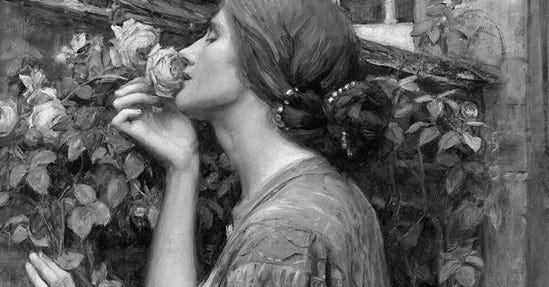
There was once a woman who lived inside words and worlds. She wandered through pages as though they were forests. She could disappear for hours into a single sentence. She read not because she wanted to become intelligent. She read because she wanted to become porous. She wanted life to enter her. She wanted to feel the world more deeply than her own skin allowed. And somewhere along the way, she vanished. Perhaps buried so deep that she has become a stranger. Who has she become?
Same mind, but a different heart
When she looks at the woman she is now, she does not entirely recognize her. She still reads, yes. She still thinks. She still writes. From the outside, it might seem like nothing has changed. But the soul inside has altered in a devastating way.
Once, reading was a form of falling in love. Now it feels like a performance, to prove a point.
She used to sit doing nothing, and thoughts arrived naturally, mysteriously, without any force. Now every thought seems to stand trial before it is even allowed to exist. Is this good enough? Is this intelligent enough? Is this articulate enough? Is this worth saying aloud?
Once, writing was how she listened to herself. And now all it feels like is explaining her existence to strangers.
And she does not know exactly when this transformation occurred. That is perhaps the cruelest part of it. Just a slow poisoning of that beautiful soul she once was. The woman she used to be read because she was hungry. The woman she is now reads because she wants to remain relevant to conversations she no longer even enjoys.
There is a difference between devotion and consumption, and in this chaotic modern world, the two get confused. It is bizarre to think that even beauty must justify itself through usefulness. Even solitude must become growth. Every reflection must become content. When did she stop simply experiencing things?
Moonlight, but artificial
Sometimes she thinks the internet did not merely give audiences, but an abyss. People keep staring into it too long, and then they get lost, with no way back, because the world just keeps moving forward.
There was a time when she could read a passage and simply let it move through her, like moonlight through water. She did not need to formulate opinions instantly. She did not need to extract arguments or construct frameworks or convert every emotional encounter into intellectual architecture. She did not need to prove the legitimacy of the feeling. Now even her wonder feels observed. She is starting to believe this is what grief looks like in the new world.
She used to love being her. There was something holy about her aimlessness.
In this terrifying and overwhelming world, people who genuinely love thought and art and literature begin, without meaning to, to wear intelligence like a mask of legitimacy. They read to construct an identity. They write to maintain relevance. And worst of all, they begin to think not because they are moved to think, but because silence now feels like failure. What a tragedy that is.
She doesn’t know what to tell her
She wonders whether the woman she used to be would recognize her now. Would she love her? Would she be proud of her? She thinks that woman would admire certain things. She would be proud that she became articulate. But she also thinks she would be worried.
She would ask why everything feels so heavy now. She would ask why she does not read for fun, but keeps taking notes for the next essay she wants to write. She would ask why every thought seems exhausted before it is even born. And perhaps hardest of all, she would ask why every human experience and every life has to become material, content. And she does not have an answer for her.
She thinks people underestimate how much of the soul depends upon uselessness, upon just wandering. When was the last time she invented worlds from dust, light, and fragments of imagination?
What has she become? What a sorrowful corruption of something once so sacred.
The woman who understood that to think deeply was never the goal, she refuses to believe she is dead.
Because, darling, dead things do not mourn themselves.