

John Berger’s Ways of Seeing brought me back to a thought that is easy to agree with in the abstract, but much harder to live inside. “Seeing is never innocent.” If I had to explain to a child what seeing means, I’d probably say, “It’s the world arriving at the eyes.” But the twist is that seeing is always already shaped, because it happens inside a particular mind, inside a particular body, inside a culture that has trained attention long before any individual begins to name what they notice.
One might call that “reality.” Reality, in that sense, arrives already filtered by language, culture, and values, and by the limits of what a nervous system can register, and by the simplest fact that the observer is always inside the observation. So how can I be sure whose eyes I am seeing through? I can’t, because there is no clean outside position from which to verify what is being seen. It is not purely somebody else’s eyes, and it is not purely mine either, because I am a culmination of life that has happened to me, and of life that happened long before I came into existence. I can list the causes, like genes, DNA, society, culture, experience, and the accumulation of what has happened.
Berger’s line, “We only see what we look at,” starts to feel more interesting to me.
When I separate the physical fact of vision from the act of “seeing,” it becomes clearer that looking is a kind of choice. And choice is narrowing. One thing is brought within reach, and a hundred other things fall back out of reach. Even that narrowing has already been shaped by what I have been taught to notice, and what my mind has learned to scan for.
Whose eyes?
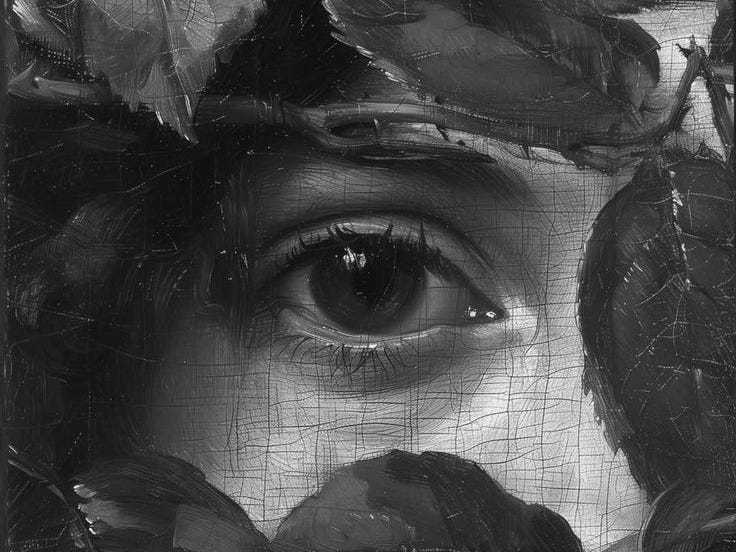
That brings me back to my earlier question about “whose eyes” I am using. There is a growing consciousness of individuality here, proof that this was one person’s seeing and not another’s. At a certain point, the question of perception becomes inseparable from the question of being perceived. The moment someone notices they are being seen, they often begin to see themselves through that gaze. Even when one is convinced they are seeing clearly, they are also inside someone else’s seeing.
Also, present perception is braided with whatever has already happened: past experience, past habits of attention, what I have learned to fear, what I have learned to call beautiful, what I have learned to ignore. All of it becomes what I draw inferences from, and what I carry into the present. It is difficult to pretend this is not happening every time one looks at something.
Berger also writes, “We never look at just one thing; we are always looking at the relation between things and ourselves.”
And then I get stuck on the question. When I see something, where does seeing end and where does interpretation begin?
I think about how the eyes can hold still while the mind keeps moving, stitching pieces together. It pulls in memory, preference, fear, desire, and the whole backlog of what I have already learned to notice. In that sense, “vision” can feel continuously active, because “thought” is continuously active. The mind connects fragments and I end up calling that connecting “seeing.” What looks like a single act is a layered process: sensation, orientation, association, and then meaning.
The mighty ocean and petty buckets
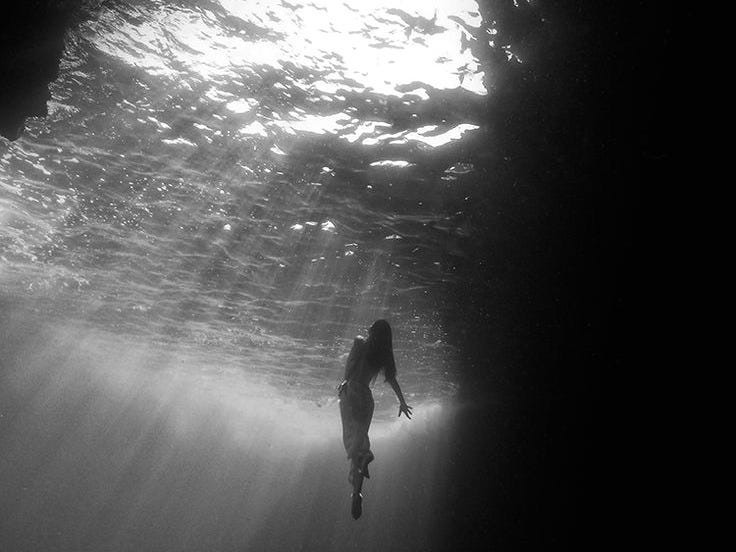
When I move from “seeing” to “thought,” I realize I have spent my whole life trying to articulate what I call “thoughts.” Quite often, though, I feel convinced that language restricts thought, that thought has to be forced out into words, and that something in that forcing becomes rigid. But my mind does not feel rigid. It feels fluid, always moving, never quite settling. So how do I “show” you what my thought is?
It can feel like standing in front of an ocean and being asked to capture it, to tell the world what it is. So I reach for buckets. I fill them with whatever words I can find. In the end, the buckets can be shown to someone else, the way I am writing this to you now, so you can read it and “see” my thought. Even then, am I sure? It is easy to argue that it is not enough. The source of my thought feels like an ocean, a sense of meaning with no edges, and I keep reaching for language to give it edges. That sounds absurd.
Each of us can see and feel the ocean individually, and it makes me wonder whether the ocean is the same for everybody, a shared edgeless field of meaning, or something like it. Even if there is a sharedness, the forms shaped out of it, through the buckets, are obviously different. That is why each of us is different, and the difference comes from the “ways of seeing”, from perception, from upbringing, from what we are taught to value, from the kinds of thinking we learn to build, from what is called reality.
When you’re inside the ocean, is there an impulse to understand, and does understanding become an act of capturing it, naming it, explaining it? Because when I’m inside the ocean, meaning feels like the only way to trust the ocean. Then the search for meaning pulls me out of it, and I get further away. I start thinking about the intent behind stepping out, about finding buckets for the ocean, about carrying it forward into another person, about changing something, for example, you.
That is why the ocean, or shared meaning, feels like a kind of magic to me. We show each other our buckets, and sometimes something stable appears between them. The ocean is not possessed by any one person’s way of seeing, and yet it can be approached together. Isn’t that beautiful?
The paradox is living without explanation, or explaining oneself out of living. What would you choose?
Why make anything?
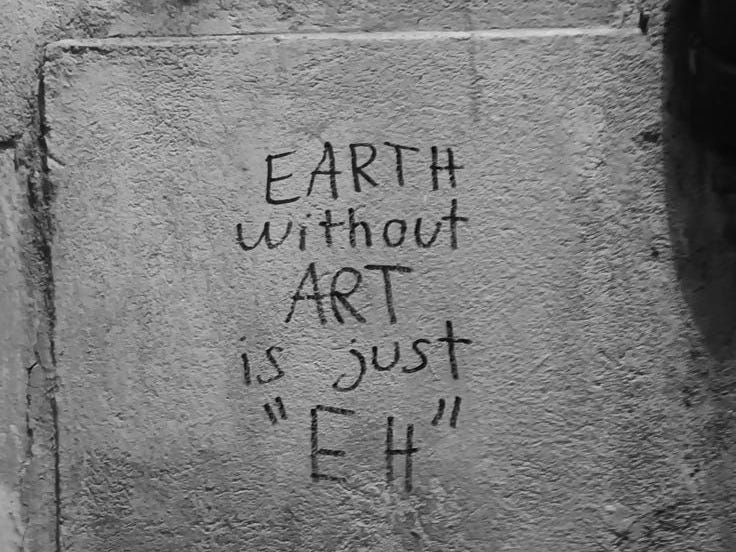
At this point, feeling, touching, or immersing inside the ocean is what I can clumsily call whatever is there before interpretation begins. The ocean is the first contact before words. But is it before thought, or after? In that sense, the ocean is not just something happening to me. It is what lets the underlying things feel real, even when they cannot be proven in language. Because without language, or any sort of expression, there would be no way to claim the ocean exists at all. That is why we make art, we write, we picture, we create.
Perhaps this is one reason art keeps returning, even when each era feels compelled to justify it. The age of AI asks again what art is for, the way earlier periods, and Walter Benjamin, asked what art is for in the age of mechanical reproduction. The recurrence of the question might come from anxiety, but the answer feels the same. When something is made, written, sung, photographed, something is placed outside the self and then met again. It is proof that something moved through a person, that existence left a mark.
Yours in thought,
Yana